




Blog
Sauna + Cold Plunge: Building a Contrast Therapy Routine at Home
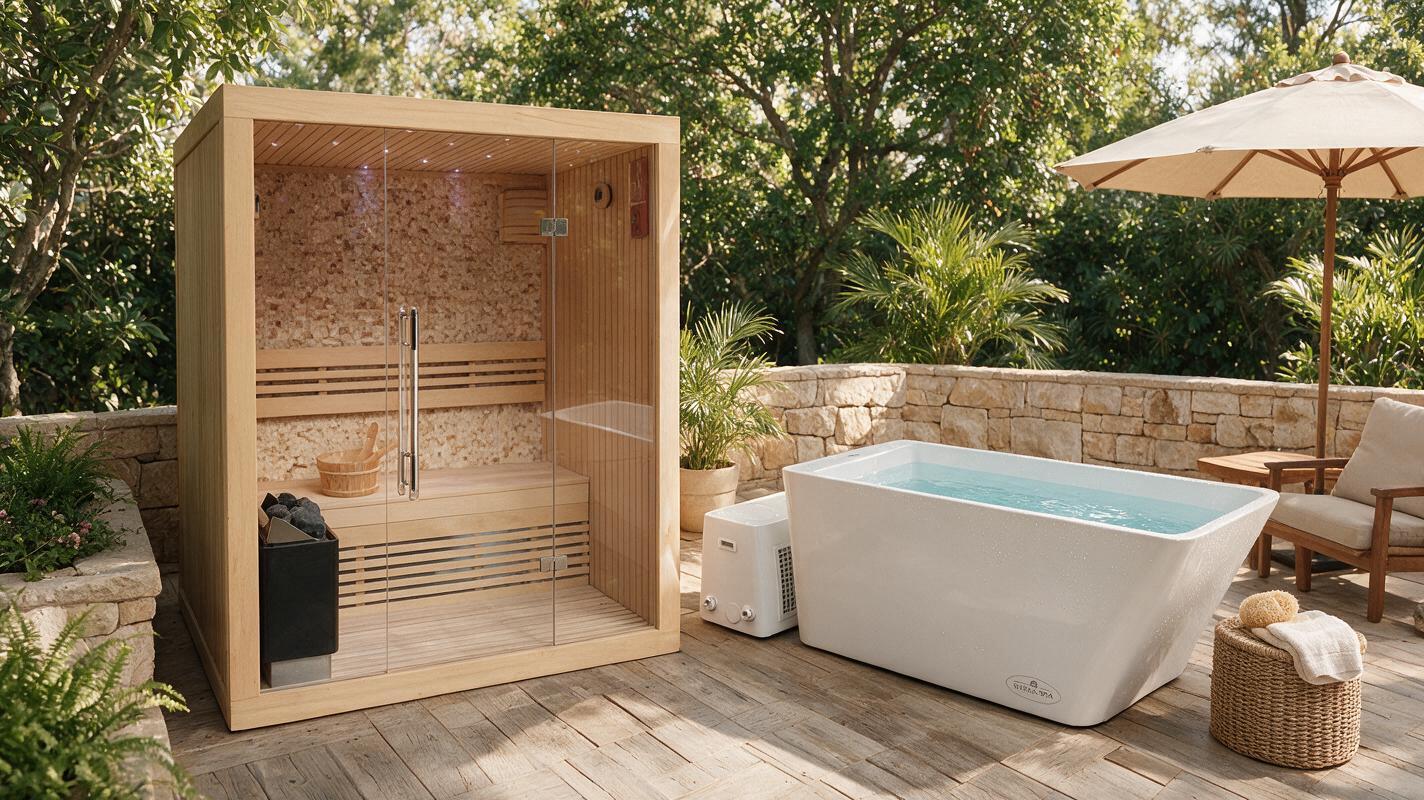
The Finns figured this out centuries ago: heat yourself thoroughly in the sauna, then walk straight into a cold lake. Repeat until you feel like a new person.
They didn’t have a name for the neurochemistry. They just knew it worked. Today it’s called contrast therapy, and it’s gone from Nordic tradition to one of the biggest wellness movements of 2026 — moving out of gyms and studios and into home setups across Richmond.
If you own a sauna and a cold plunge, or you’re thinking about pairing them, this guide covers how to actually use them together: the round structure, the timing, the safety rules, and a starter plan that won’t scare you off in week one. We stock both halves of this ritual on our showroom floor, so we get these questions daily. Here are the answers.
What Is Contrast Therapy?
Contrast therapy means alternating deliberate heat exposure with cold immersion in structured rounds — sauna, then plunge, then rest, then again.
The mechanism is straightforward. Heat dilates your blood vessels and sends circulation toward the skin. Cold does the opposite, constricting vessels and pushing blood toward your core. Cycling between the two works your circulatory system like a pump — expansion, contraction, expansion — while triggering two very different chemical responses: deep relaxation from the heat, and the sharp norepinephrine surge that makes a cold plunge feel like someone flipped your lights on.
Neither modality alone produces quite the same effect as the swing between them. That’s the whole appeal.
What You Need to Do Contrast Therapy at Home
The equipment list is short:
-
- A heat source. A traditional sauna (typically 150–195°F) or an infrared sauna (typically 120–140°F ambient, with the heat working on you directly). Both work for contrast therapy — more on the differences below.
- A cold source. A powered cold plunge that holds 39–55°F is the gold standard because it’s ready whenever you are. A passive basin with ice works too, with more effort. If you’re still choosing, our cold plunge buyer’s guide walks through the decision.
- The small stuff. A towel, a full water bottle, a timer, and somewhere to sit between rounds. That’s genuinely it.
Placement matters more than people expect. The closer your plunge sits to your sauna door, the better the routine flows — a fifty-foot walk across a cold yard in a wet towel kills the ritual fast. Patios, garages, and pool decks are the most popular setups we see.
Browse our saunas · Browse our cold plunges
The Basic Contrast Therapy Routine, Step by Step
There are endless variations, but the classic framework most people settle into looks like this:
-
-
- Heat first: 10–20 minutes in the sauna. Long enough to be sweating freely and thoroughly warm — not dizzy, not desperate. Always begin with heat; starting cold on a cool body is needlessly brutal and skips the vascular swing that makes the routine work.
- Rinse, then plunge: 1–3 minutes in the cold. A quick rinse knocks the sweat off before you enter the plunge (your filter will thank you). Ease in, exhale slowly through the gasp reflex, and settle to your shoulders.
- Rest: 5–10 minutes. Air dry, breathe, drink water. This pause is part of the protocol, not dead time — it’s where your system recalibrates.
- Repeat for 2–3 total rounds. Most people find three rounds is plenty. This isn’t an endurance contest.
-
One detail worth knowing: how you end changes how you feel afterward. Finish on cold and you’ll walk away alert and switched on — ideal for mornings. Finish on heat (or a warm shower) and you’ll drift toward relaxation — better for evenings and sleep. Same routine, two different tools.
Infrared vs. Traditional Sauna for Contrast Therapy
Both get the job done, and we carry both — from Harvia-heated traditional rooms and outdoor barrel saunas to infrared models.
A traditional sauna delivers the classic experience: intense ambient heat, a proper rolling sweat, and the biggest possible temperature swing when you hit the plunge. If your mental image of contrast therapy is the full Finnish ritual, this is it.
An infrared sauna runs cooler and gentler, heating your body directly rather than roasting the air. Sessions typically run a bit longer to reach the same deep-warm state — 20 to 30 minutes is common — and the transition into the cold feels slightly less dramatic. For people who find traditional sauna heat overwhelming, infrared makes the routine sustainable, and a sustainable routine beats an impressive one you quit.
Our take from the showroom floor: pick the heat you’ll genuinely use four times a week. The plunge doesn’t care which sauna warmed you up. If you’re weighing the two, our article on infrared sauna health benefits is a good starting point.
How Often Should You Do Contrast Therapy?
Most home users land at two to four sessions per week, and that’s a sweet spot worth aiming for. Daily contrast therapy is fine for experienced users who feel good doing it — plenty of our customers make it a morning fixture — but when you’re starting out, rest days help your body adapt to a genuinely demanding stimulus.
One honest note for the lifters: some research suggests that jumping into very cold water immediately after strength training may blunt a portion of the muscle-building response. If your priority is hypertrophy, many athletes simply separate the plunge from the weight room by several hours, or save contrast sessions for rest days. For soreness after endurance work, timing matters much less.
The Benefits — and What’s Still Being Studied
Here’s the honest version.
What users reliably report, and what the short-term physiology supports: a pronounced mood and alertness lift after cold exposure, deep relaxation from heat, reduced muscle soreness after hard training, and — when sessions end warm — noticeably easier wind-down and sleep. Sauna bathing itself has decades of research behind it, including long-running Finnish population studies linking regular use to cardiovascular health.
What’s still being studied: many of the bigger longevity and metabolic claims circulating on social media run ahead of the current evidence. Cold immersion research in particular is younger than the hype suggests. That doesn’t mean the routine isn’t worth doing — it means the best reasons to do it are the ones you can feel: you recover better, you sleep better, and you start the day sharper. Those show up in week one, no long-term study required.
Contrast Therapy Safety: Read This Part
Contrast therapy swings your heart rate and blood pressure in both directions on purpose. Respect that.
-
-
- Talk to your doctor first if you have a heart condition, high blood pressure, or any cardiovascular concern, or if you’re pregnant. This is the one rule with no workarounds.
- Stand up slowly when leaving the sauna, and take the transition to the plunge at a walk, not a sprint. Lightheadedness between stations is your cue to sit down and cool off gradually instead.
- Hydrate before, during, and after. You’ll sweat out more than you think.
- No alcohol. Not before, not during. Heat plus cold plus alcohol is how good routines become bad stories.
- Know your exit signals. Dizziness, nausea, numb extremities, or uncontrolled shivering means the session is over — today, not after one more round.
Start milder than the internet shows you. The influencer doing ten minutes at 38°F built up to that over months. You don’t start there.
-
A Simple 4-Week Starter Plan
If you’re new to the cold half of this equation, ease in:
| Week | Routine |
|---|---|
| 1 | Sauna only, 2–3 sessions. End each with a 30-second cool shower. |
| 2 | Add the plunge at 55–60°F: one round of sauna → 30–60 seconds cold → done. |
| 3 | Two full rounds per session. Extend cold time toward 2 minutes as comfort allows. |
| 4 | Settle into your rhythm: 2–3 rounds, 2–4 days a week. Lower the plunge temperature gradually if you want more edge. |
By the end of a month, the plunge stops being a dare and starts being the part you look forward to. Ask anyone who’s stuck with it.
Try the Ritual Before You Build It
There’s an easy way to find out whether contrast therapy is for you before you commit to equipment: come stand in our showroom. We’ve got traditional saunas, barrel saunas, infrared models, and powered cold plunges on the floor at 2501 Glen Center Street in Richmond — side by side, prices marked, nobody hovering. Step inside the saunas. Check the plunge depth for your height. Ask us how other customers laid out their patios.
We’ve been helping Virginians build home wellness setups since 1977, and the sauna-plus-plunge pairing is the most exciting thing we’ve seen come through this industry in years.
Visit Monday–Friday, 8 a.m.–5 p.m. (Saturdays by appointment), or call 804-203-0207. Get directions
FAQ
Should you start with the sauna or the cold plunge?
Start with the sauna. Heating up first dilates blood vessels and gets a full sweat going, which sets up the vascular swing that makes contrast therapy effective. Starting cold on an unheated body is unnecessarily harsh and skips the mechanism entirely.
How many rounds of contrast therapy should you do?
Two to three rounds is the standard for most people: 10–20 minutes of heat, 1–3 minutes of cold, and 5–10 minutes of rest per round. More rounds add fatigue faster than they add benefit.
Can you do contrast therapy with an infrared sauna?
Yes. Infrared saunas run cooler than traditional saunas, so sessions typically last a little longer — 20 to 30 minutes — to reach the same deeply warmed state before the plunge. The routine structure stays the same.
Is it safe to do contrast therapy every day?
Experienced, healthy users often practice daily, but beginners should start with two to four sessions per week and include rest days while the body adapts. Anyone with cardiovascular conditions or who is pregnant should consult a doctor before starting at any frequency.
Should you shower between the sauna and the cold plunge?
A quick rinse is a good habit. It removes sweat before you enter the plunge, which keeps the water cleaner and extends the life of your plunge filter — and the brief transition doesn’t diminish the contrast effect.