




Blog
What It Costs to Run a Hot Tub Per Month in Virginia
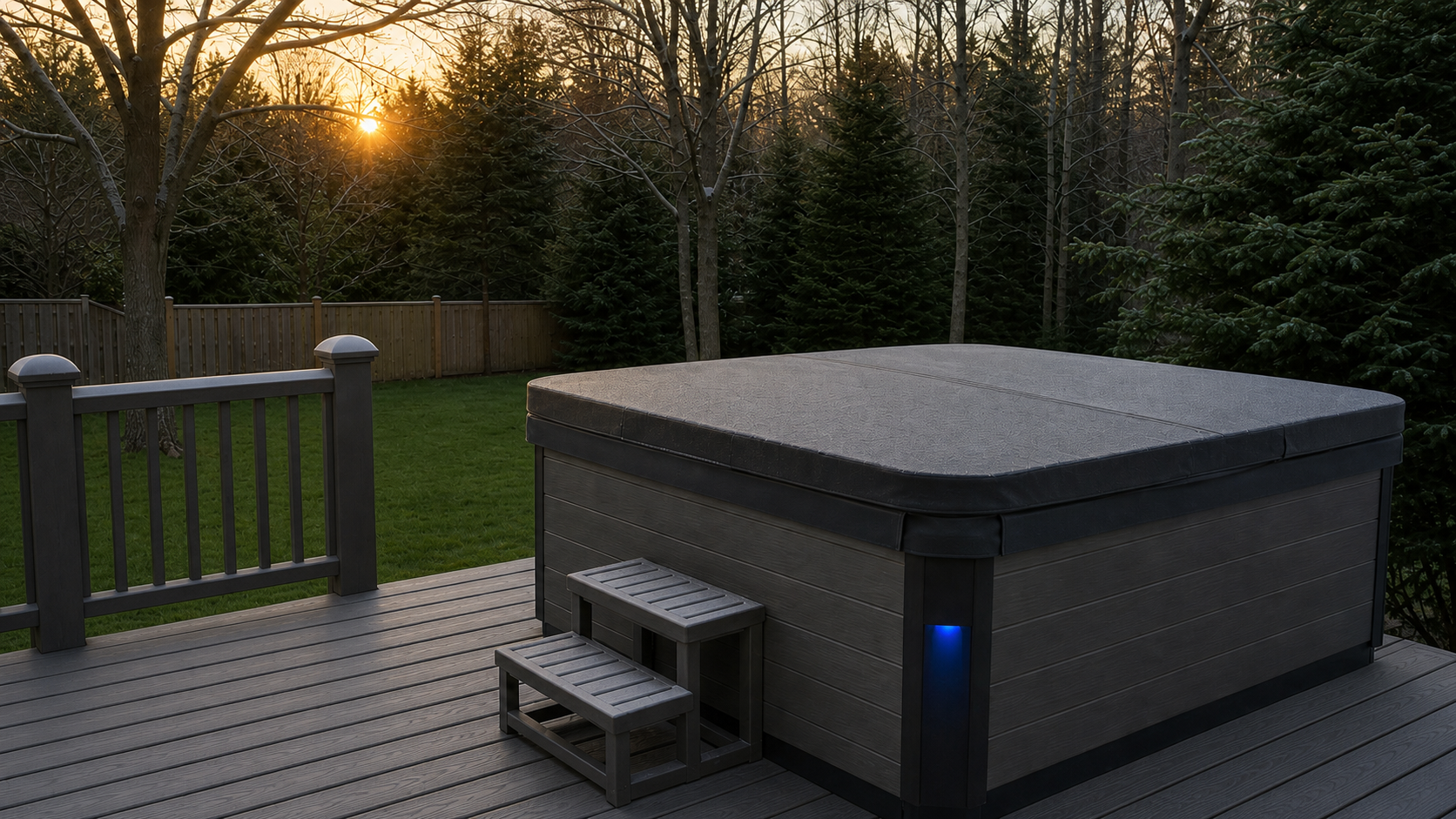
You’ve priced the tub. Now comes the question every buyer asks us on the showroom floor, usually in a lowered voice: “What’s it going to do to my electric bill?”
Less than the internet’s scariest guesses, more than zero — and unlike most articles on this topic, we’re going to do the math with actual Virginia numbers, because a hot tub in Richmond costs meaningfully less to run than the same tub in Minnesota. Here’s the full monthly picture: electricity, chemicals, water, and filters.
The Short Answer
For a modern, full-foam insulated hot tub with a good cover in Virginia, plan on roughly $45–$70 per month all-in: about $15–$35 in electricity depending on the season, $20–$30 in water care, and a few dollars a month amortized for filters and refill water. Over a year, that’s in the neighborhood of $550–$800 — the details, math, and ways to land at the low end are below.
The Electric Bill: Real Virginia Math
Electricity is the biggest line item, so let’s build it from the ground up.
The rate. Dominion Energy’s effective residential rate runs about 15¢ per kilowatt-hour as of early 2026 (Virginia’s statewide residential average is a bit higher, around 17¢, and Appalachian Power territory differs — check your own bill for the exact figure). Dominion Energy Virginia residential rate schedules
The usage. A well-insulated 220V tub held at \~102°F with a fitted cover and moderate use (four or five soaks a week) draws roughly:
| Season | Typical daily draw | Monthly cost at 15¢/kWh |
|---|---|---|
| Summer | 2–3 kWh/day | \~$9–$14 |
| Spring / Fall | 3–5 kWh/day | \~$14–$23 |
| Virginia winter | 5–8 kWh/day | \~$23–$36 |
Average it across the year and most owners land around strong>$20–$25 a month — a number that surprises people who expected triple digits. Virginia’s mild shoulder seasons are doing you a favor: the tub spends most of the year barely working to hold temperature.
The same math is why insulation quality was worth paying for back at purchase time: a poorly insulated tub — and especially an inflatable — can draw two to three times the kilowatt-hours, turning that $25 winter month into $60–$90. The cheap tub charges rent.
Water Care: The Predictable $20–$30
Chemicals are the steady, boring line item: sanitizer, pH balancers, and an occasional shock treatment run most owners $20–$30 a month. Buying in reasonable quantities beats drip-buying single bottles — our three-month starter kit covers the full opening stretch for Water care kits and supplies
Filters are nearly free on a monthly basis but worth budgeting honestly: rinse the filter monthly, deep-clean it quarterly, and replace it about once a year. Replacement filters run $49–$70 in our accessories shop — call it $4–$6 a month amortized.
Good water habits are also good economics — a balanced, clean tub heats efficiently and spares the equipment. Our hot tub maintenance tips cover the routine in ten minutes a week.
Refill Water: The Cost Everyone Overestimates
A typical hot tub holds 300–450 gallons and gets drained and refilled three or four times a year. Even with Richmond-area water and sewer charges, each refill costs only a few dollars — amortized, roughly $1–$3 a month. Of everything on this page, it’s the number least worth worrying about.
The Annual Total
Putting it together for a modern insulated tub in Virginia:
| Line item | Per year |
|---|---|
| Electricity (seasonal average) | \~$240–$360 |
| Water care chemicals/ Fall | \~$240–$360 |
| Replacement filter | \~$50–$70 |
| Refill water | \~$20–$40 |
| Total | \~$550–$830 (≈ $45–$70/month) |
For perspective: that’s the running cost of a daily-use hydrotherapy setup for about what one monthly massage appointment costs. We’ll let you do that comparison yourself in February.
Six Ways to Keep It at the Low End
- Hold a steady temperature. If you soak several times a week, keeping the tub at temperature costs less than repeatedly reheating from big drops. Save the setbacks for vacations longer than a few days.
- Retire the waterlogged cover. A cover that’s absorbed water has lost its insulation and is quietly the most expensive accessory you own. If it’s heavy to lift, it’s costing you every night.
- Clean the filter monthly. A clogged filter makes the pump work harder for the same water flow — wasted electricity plus equipment wear.
- Mind the wind. A tub exposed to winter wind sheds heat fast. A fence line, privacy panel, or sheltered corner of the patio measurably cuts winter draw.
- Drop two degrees if you soak daily.100°F instead of 102°F is barely noticeable in the water and quietly trims the heating load all season.
- On a time-of-use plan? Heat off-peak. Dominion offers time-of-use rates with cheap overnight power — a hot tub is a perfect off-peak appliance, since it holds heat happily until your evening soak.
The Bottom Line
A quality insulated hot tub in Virginia is a $45–$70 a month habit, all-in — mild winters and a decent cover do most of the work for you. The buyers who get burned on running costs are almost always the ones who saved money on insulation at purchase time, which is the argument for buying the well-built tub once.
Want the real numbers for a specific model? Come by the showroom at 2501 Glen Center Street in Richmond and we’ll walk you through the insulation and pump specs on anything on the floor — or call 804-203-0207. Get directions
FAQ
How much does a hot tub raise your electric bill in Virginia?
For a modern full-foam insulated tub with a good cover, typically $15–$35 per month depending on season — around $9–$14 in summer and $23–$36 in winter at Dominion Energy’s roughly 15¢/kWh effective rate. Poorly insulated and inflatable tubs can cost two to three times more.
Is it cheaper to leave a hot tub on all the time?
For regular users, yes. Holding a steady temperature in a well-insulated tub costs less than repeatedly reheating hundreds of gallons from a large temperature drop. Lower the setpoint only for absences longer than a few days.
Do hot tubs cost more to run in winter?
Yes — winter is the peak season for heating costs, typically two to three times the summer draw. Virginia’s relatively mild winters keep the penalty modest: most owners see roughly $23–$36 a month in the coldest stretch rather than the extreme figures seen in northern climates.
How much do hot tub chemicals cost per month?
Most owners spend $20–$30 per month on sanitizer, pH balancers, and shock. Add roughly $4–$6 per month amortized for an annual filter replacement.
How much does an inflatable hot tub cost to run?
Considerably more per gallon of comfort. With thin walls and inflatable covers, they commonly draw two to three times the electricity of an insulated hard-shell spa — a $60–$90 winter month is realistic — which erases much of their purchase-price savings within a few seasons.