




Blog
Cold Plunge Buyer’s Guide: What to Know Before Your First Plunge Tub
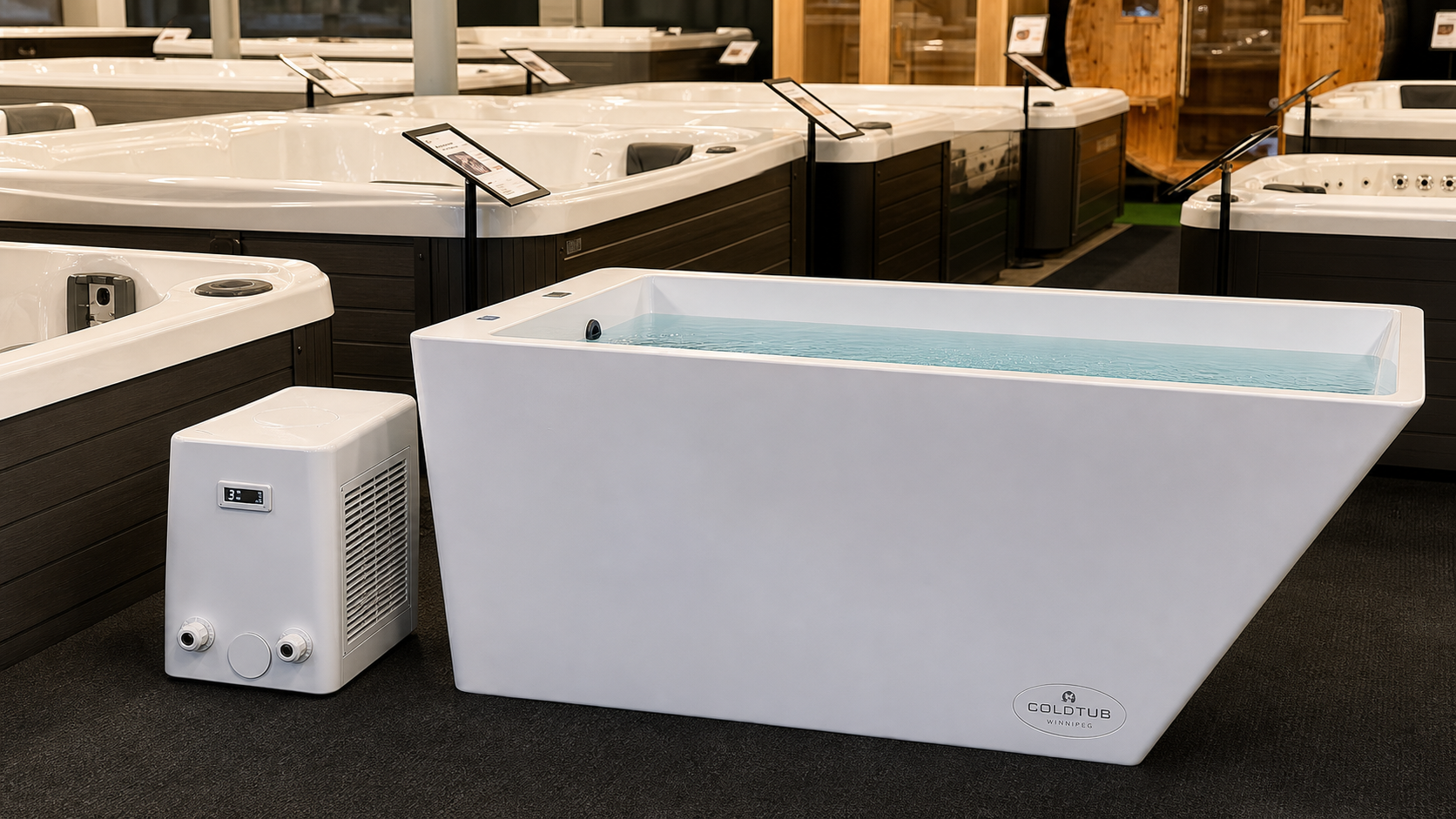
Five years ago, cold plunges lived in pro locker rooms and the occasional biohacker’s garage. Now they’re showing up on back patios all over Richmond — and if you’re reading this, you’re probably thinking about adding one to yours.
Good instinct. But before you order the first tub an ad shows you, it’s worth understanding what separates a $600 basin from a $6,000 powered plunge, which specs actually matter, and which ones are just marketing. We’ve been in the spa business since 1977, and we stock cold plunges right here in our Richmond showroom — so this guide comes from the floor, not from a spec sheet.
Here’s everything we’d tell you if you walked in the door.
What Is a Cold Plunge, Exactly?
A cold plunge is a tub built for deliberate cold-water immersion — typically somewhere between 39°F and 59°F, for a few minutes at a time.
Every plunge on the market falls into one of two camps, and this single distinction drives everything else in your buying decision:
- Passive tubs (ice baths). An insulated basin you fill with water and cool down yourself, usually with bags of ice. Simple, portable, inexpensive.
- Powered plunges. A tub with a built-in chiller, filter, and sanitation system that holds your target temperature around the clock. Fill it once, set it to 45°F, and it’s ready whenever you are.
Neither is “wrong.” They’re built for different owners — which brings us to the real question.
Ice Bath vs. Powered Cold Plunge: What’s the Real Difference?
The honest answer: convenience, and whether you’ll still be using it in March.
A passive basin costs a fraction of a powered unit, and it’s a great way to find out whether cold plunging is actually for you. The catch is the routine. You’re hauling ice every session, the water temperature drifts the moment you stop adding it, and without filtration you’re draining and refilling constantly.
Then there’s the Virginia problem. In a Richmond July, a passive tub sitting outside doesn’t stay cold — it becomes a lukewarm kiddie pool by 10 a.m. A chiller is what makes year-round plunging realistic in our climate.
A powered plunge flips the equation. Higher upfront cost, near-zero daily effort. The chiller holds temperature through a 95-degree August afternoon, the filter and sanitation system keep the water clean for weeks instead of days, and the tub is ready the moment you are. In our experience, that last part is what determines whether a plunge becomes a habit or a planter. The tubs that get used daily are the ones that don’t ask anything of you first.
Browse the cold plunges we stock in Richmond.
The Specs That Actually Matter
Cold plunge marketing loves jargon. Here’s the short list of what genuinely affects your experience.
Chiller power and cool-down speed
Chillers are rated in horsepower — commonly 1/2 HP to 1 HP in residential units. More horsepower means faster cool-down and steadier temperatures when it’s hot outside. If you want true cold (low 40s°F or below) in a Virginia summer, don’t undersize the chiller. Ask how low the unit goes and how quickly it recovers after a session.
Filtration and sanitation
This is the spec people skip and then regret. A good powered plunge runs your water through a micron filter, and better units add ozone or UV sanitation on top. The difference is practical: clean, clear water for weeks between changes instead of a drain-and-refill chore every few days. Replacement filters should be cheap and easy to get — ours run about $39 and we keep them in stock.Cold plunge filters and supplies.
Insulation and a locking cover
Insulation is what keeps your electric bill boring. A well-insulated tub with a fitted cover holds its temperature so the chiller only runs occasionally. The cover also keeps out leaves, pollen, and curious kids — worth insisting on for any outdoor placement.
Size and depth
The goal is immersion to the neck, comfortably. If you’re over six feet tall, pay close attention to interior dimensions — this is exactly why we tell people to climb into a display model before buying. A plunge that forces you to fold up like a lawn chair won’t get used. XL models exist for a reason.
Electrical requirements
Here’s some good news: unlike a hot tub, most residential cold plunges run on a standard 110V outlet — no electrician, no 220V circuit, no panel upgrade. Plug it into a GFCI-protected outlet and you’re in business. Always confirm the requirement on your specific model before delivery day.
Where it will live
Outdoors, you want a level surface, a plan for splash and drainage, and that cover we mentioned. Indoors — a garage or covered porch is popular — think about floor protection and how you’ll drain it when the water change comes due. A full plunge is heavy; pick the spot before it arrives, not after.
How Much Does a Cold Plunge Cost?
Here’s how pricing breaks down at our showroom right now:
| Tier | Example from our floor | Price |
|---|---|---|
| Entry-level basin (passive, add your own ice) | Plunge Basin | VERIFY — recently $590 |
| Powered plunge with chiller + filtration | Plunge Pro | VERIFY — recently $4,990 |
| Larger powered plunge for taller users | Plunge Pro XL | VERIFY — recently $5,990 |
| Premium all-in-one units | Cold Plunge All In / Legacy All In | VERIFY current pricing and specs |
As for running costs: a well-insulated powered plunge with a cover doesn’t work nearly as hard as people assume. The chiller cycles on and off to hold temperature rather than running continuously — most owners find the monthly cost adds up to a few extra dollars, not a second utility bill. Insulation quality and where you place the tub matter more than the chiller itself.
Financing is available on our powered units if you’d rather not pay upfront.Ask us about financing
What About the Health Benefits?
We’ll give it to you straight, because the internet won’t.
Cold-water immersion has real, well-documented short-term effects: the cold triggers a surge of norepinephrine, which is why people describe feeling alert, focused, and genuinely better after a plunge. Many athletes use cold immersion to manage soreness after hard training. And pairing a plunge with sauna heat — contrast therapy — is one of the oldest recovery rituals there is, with roots in Finnish bathing culture that go back centuries. If you own both, alternating between them is the whole point.
What we won’t tell you is that a cold plunge cures anything. The research on long-term benefits is promising but still developing, and some claims floating around social media run well ahead of the evidence. Buy a plunge because you’ll use it and it makes you feel good — that’s reason enough.
One caveat we take seriously: cold immersion causes a rapid spike in heart rate and blood pressure. If you have a heart condition, high blood pressure, or any cardiovascular concern, or if you’re pregnant, talk to your doctor before you start plunging. That’s not boilerplate. It’s the first thing we tell customers in the showroom.
Cold Plunge Safety for Beginners
You don’t earn anything by suffering on day one. Here’s how experienced plungers recommend starting:
- Start warmer than you think. 55–60°F is plenty cold for a beginner. You can chase the low 40s later.
- Start shorter than you think. Thirty seconds to a minute is a real session. Most regulars settle into two to five minutes — there’s no prize past that.
- Control your breathing. The gasp reflex on entry is normal. Slow, steady exhales are how you ride it out.
- Get out if something feels wrong. Numbness, dizziness, or blue-tinged skin means the session is over.
- Skip the alcohol, and don’t plunge alone when you’re pushing colder temperatures or longer times.
Cold plunging rewards consistency, not heroics. Three sensible minutes a day beats one miserable ten-minute ordeal you never repeat.
Questions to Ask Before You Buy Any Cold Plunge
Take this list with you — whether you shop with us or anyone else:
- What’s the warranty on the chiller specifically? (It’s the most expensive component.)
- How often will I change the water, and how long does a water change take?
- What do replacement filters cost, and can I get them locally?
- What’s the actual interior depth and length — can I try it for size first?
- What does delivery include, and who do I call if something needs service?
If a seller can’t answer those five questions quickly, keep shopping.
Why We Recommend Seeing One in Person
You can’t judge a cold plunge from a product photo. Depth, wall height, how it feels to step in and settle down to your shoulders — that’s physical information, and it’s exactly what determines whether you’ll love the thing in six months.
Our showroom at 2501 Glen Center Street in Richmond has cold plunges on the floor next to our hot tubs and saunas, all prices clearly marked, no pushy sales team. Climb in. Ask questions. Compare a basin to a powered plunge side by side. We’ve been doing this since 1977, and the customers who visit first are the ones who buy the right tub the first time.
Stop by Monday–Friday, 8 a.m.–5 p.m. (Saturdays by appointment), or call us at 804-203-0207. Get directions to our showroom.
FAQ
How cold should a cold plunge be?
Most cold plunges operate between 39°F and 59°F. Beginners should start at 55–60°F and work down gradually. Experienced plungers typically settle in the 40s. Colder is not automatically better — consistency matters more than the number on the thermometer.
How long should you stay in a cold plunge?
Start with 30–60 seconds. Most regular users build to two to five minutes per session. Longer exposure increases risk without much added benefit, so there’s no reason to push past the point of steady, controlled breathing.
Do cold plunges use a lot of electricity?
Less than most people expect. A well-insulated powered plunge with a cover cycles its chiller intermittently to hold temperature, so the monthly cost is typically modest — closer to running a refrigerator than a hot tub. Poor insulation or direct summer sun will drive costs up.
How often do you change the water in a cold plunge?
A powered plunge with good filtration and ozone or UV sanitation typically needs a water change every two to four weeks, depending on use. A passive basin without filtration needs draining much more often — usually every few days.
Can you use a cold plunge outdoors in Virginia year-round?
Yes — with a chiller. Richmond summers will warm an unpowered tub past useful plunge temperatures by mid-morning, so a powered unit is what makes July plunging possible. In winter, the same insulated tub works fine outdoors; some owners find winter is when they use it most.